
Transducers

Selection guide

Select the transducer you need

Select your settings

  • Higher frequency → better spatial resolution, but may increase attenuation in some liquids.
  • Larger diameter → less diverging beam, longer near field, smaller sampling volume.
  • Choose based on space and operating temperature. The series does not affect the ultrasonic properties.

Learn more about ultrasonic field theory

The reference of the transducer is: TR0114LS

Technical specifications

Impedance: around 50 ohm
Cable: RG174
Connector: BNC
Case material: stainless steel (316L)
Front material: epoxy
Maximum pressure: 30 Bar
Maximum temp: 60 °C
Typical insertion loss:

How insertion loss is measured...

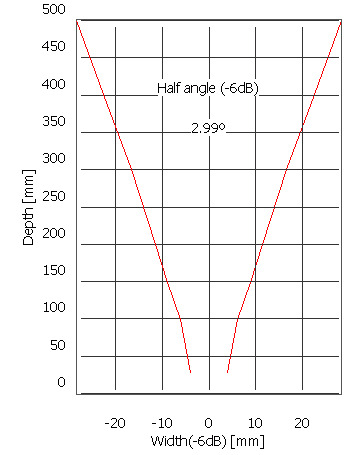
Ultrasonic field for selected transducer
 
Ultrasonic field for TR0114LS
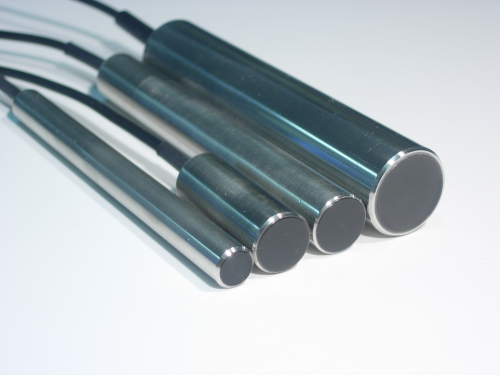
All available transducers

Available series

  • Standard series (LS): Stainless steel (316L), case length 90 mm, max temp 60°C.
  • Short series (SS): Stainless steel (316L), case length 30 mm, max temp 60°C.
  • High temperature (LH): Stainless steel (316L), case length 90 mm, max temp 230°C.
  • Ultra short axial cable (AS): Stainless steel (316L), case length 10–15 mm, max temp 60°C.
  • Ultra short radial cable (RS): Stainless steel (316L), case length 10–15 mm, max temp 60°C.

Guidelines for selection

Start by selecting the highest possible frequency for best spatial resolution, considering:

  • Maximum velocity and measurement depth are linked. Use UDOP software to evaluate maximum measurable velocity.
  • Ultrasonic attenuation depends on frequency. Some liquids (like oil) and plastics may limit usable frequency.

Next, select the piezo diameter:

  • Small diameter → lower sensitivity
  • Large diameter → less diverging beam, smaller sampling volume, longer near field

Finally, choose the case/series based on available space and temperature. It does not affect ultrasonic performance.
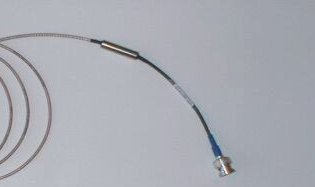
Deported matching

Deported matching impedance schematic

If using the probe in a strong magnetic field, consider the "Deported matching impedance" option. It relocates the matching components close to the connector to avoid magnetic interference.
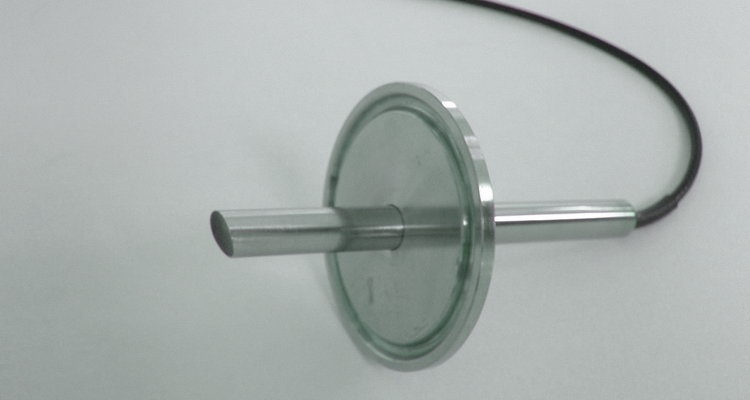
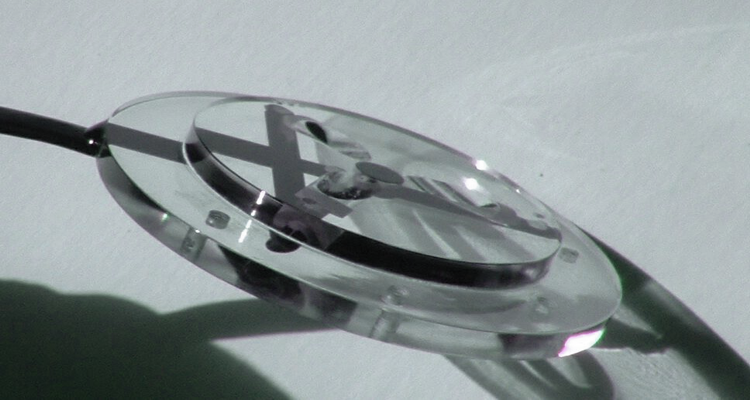
Custom ultrasonic transducer 1 Custom ultrasonic transducer 2 Custom ultrasonic transducer 3

Custom design

If you cannot find the transducer you need, request a quote. Custom probes can often be realized at no extra cost.