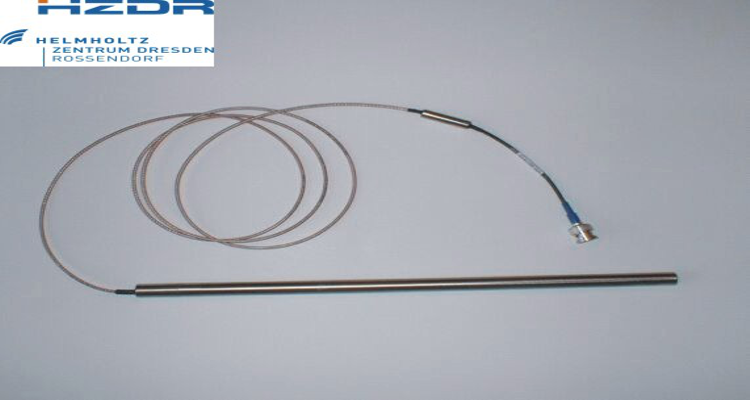
The extremity of this US-sensor can be immersed into any fluid without limit as long as a chemical intolerance
to stainless steel can be excluded. In melts where the stainless steel shows a finite solubility (for instance
liquid aluminum) a gradual degradation of the wave guide has to be taken into account which may result in a
serious limitation of the sensor operating time.
It can be used within the defined temperature range and in most applications it is not necessary to add any cooling
system. The whole sensor is surrounded by a robust stainless steel housing which enables an easy way to fix it
and maintain its position during the measurements.
Successful measurements of the velocity field need sufficient acoustic coupling between the US-sensor and the
fluid to be measured. For this purpose, the wave guide has to be directly immersed into the fluid or placed into
direct contact with the wall of the fluid vessel. In all cases, the user has to ensure good wetting conditions at
all interfaces, i.e.
- between the front surface of the wave guide and the melt
- between the front surface of the wave guide and the outer vessel wall and between the inner vessel wall and the melt


 menu
menu